
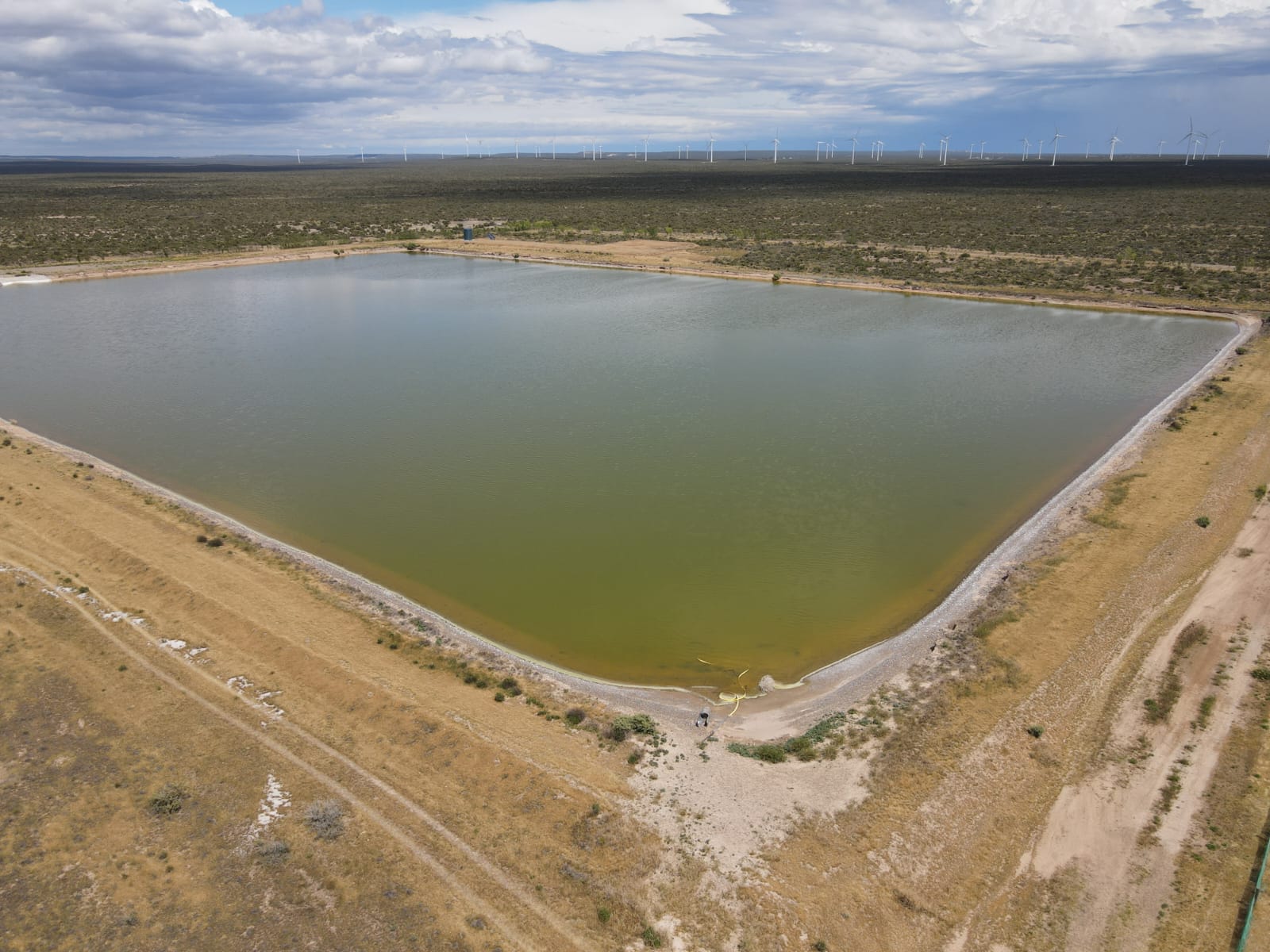
This large basin, with a surface area equivalent to about four city blocks, receives the liquids after they have undergone treatment.
At this stage, the effluent has already lost more than 98% of its organic matter—measured as BOD₅—and contains no pathogenic bacteria, meaning it can be reused for irrigation.
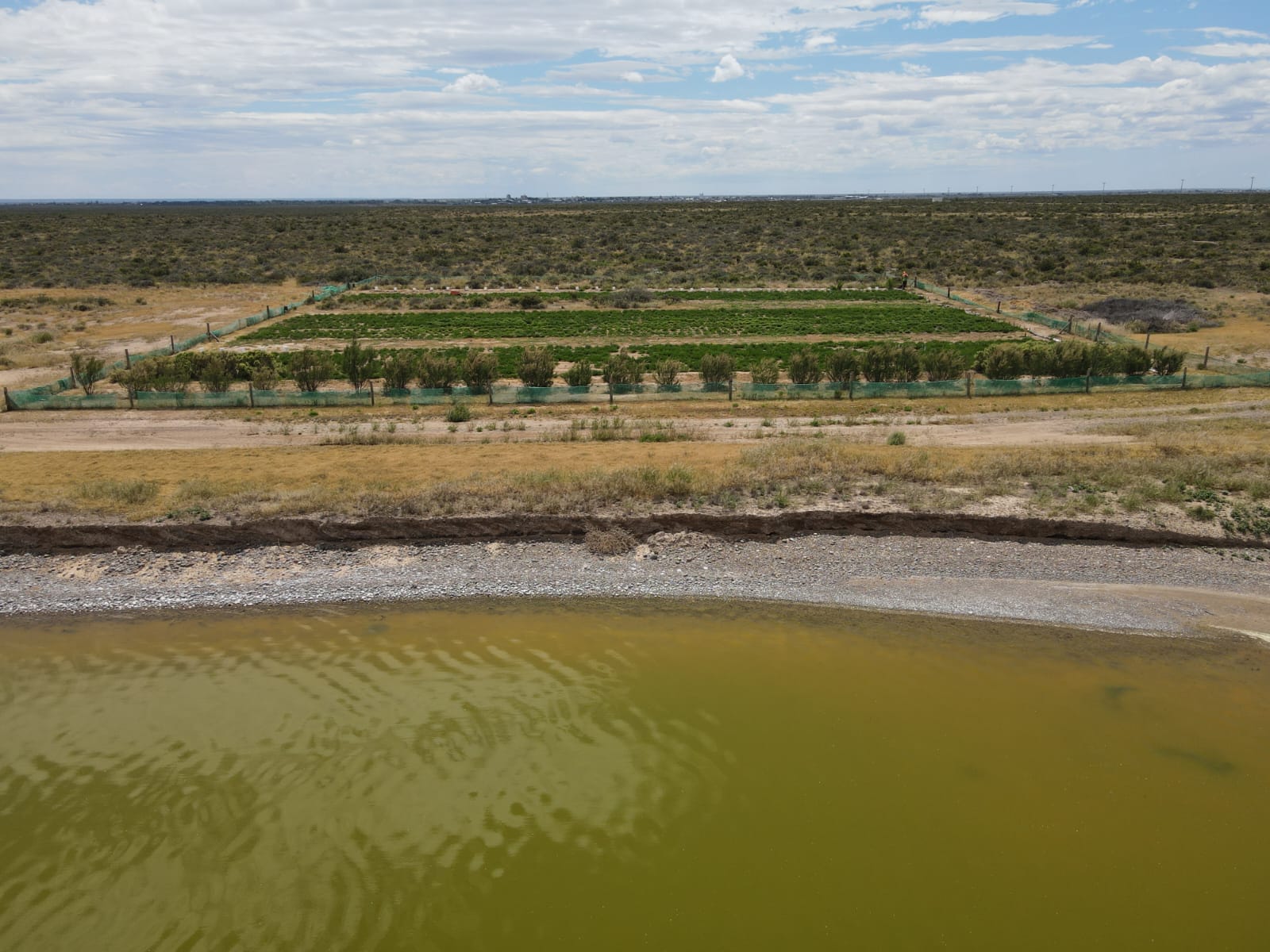
But there is a challenge: the water has a high salinity. For this reason, at RASA’s Biosaline Farm, we select halophytic species—plants specially adapted to grow in environments with a high concentration of salts.
 English
 Español